Key takeaways
- Fulfillment by Amazon (FBA) and Fulfillment by Merchant (FBM) are two different Amazon fulfillment methods. FBA outsources fulfillment to Amazon, while FBM requires sellers to manage storage, shipping, and customer service themselves.
- FBA is often better for lightweight, fast-moving products and sellers looking for Prime eligibility and simplified fulfillment operations.
- FBM can offer higher profit margins and greater operational flexibility for sellers with existing logistics infrastructure or oversized products.
- Descartes Sellercloud™ helps Amazon sellers simplify FBA and FBM operations by connecting inventory, fulfillment, shipping, and order management in one platform.
There are over 1.65 million active sellers worldwide on Amazon in 2026. If you want to sell on Amazon’s marketplace, there are two ways you can choose to store, handle, and ship your products: Amazon FBA or FBM.
Choosing between FBA and FBM can significantly impact your costs, delivery speeds, customer experience, and ability to scale your business. While Amazon FBA offers convenience and Prime eligibility, FBM gives sellers more control over fulfillment and margins. The right choice depends on your products, business model, and long-term goals.
In this blog post, you will discover the differences between FBA and FBM, the pros and cons of both, factors to consider before choosing, when to use each method, and how to strengthen your FBA and FBM processes.
What’s the difference between FBA and FBM?
The difference between FBA and FBM is simple. They’re both fulfillment options for sellers on Amazon, but they’re structured in two different ways.
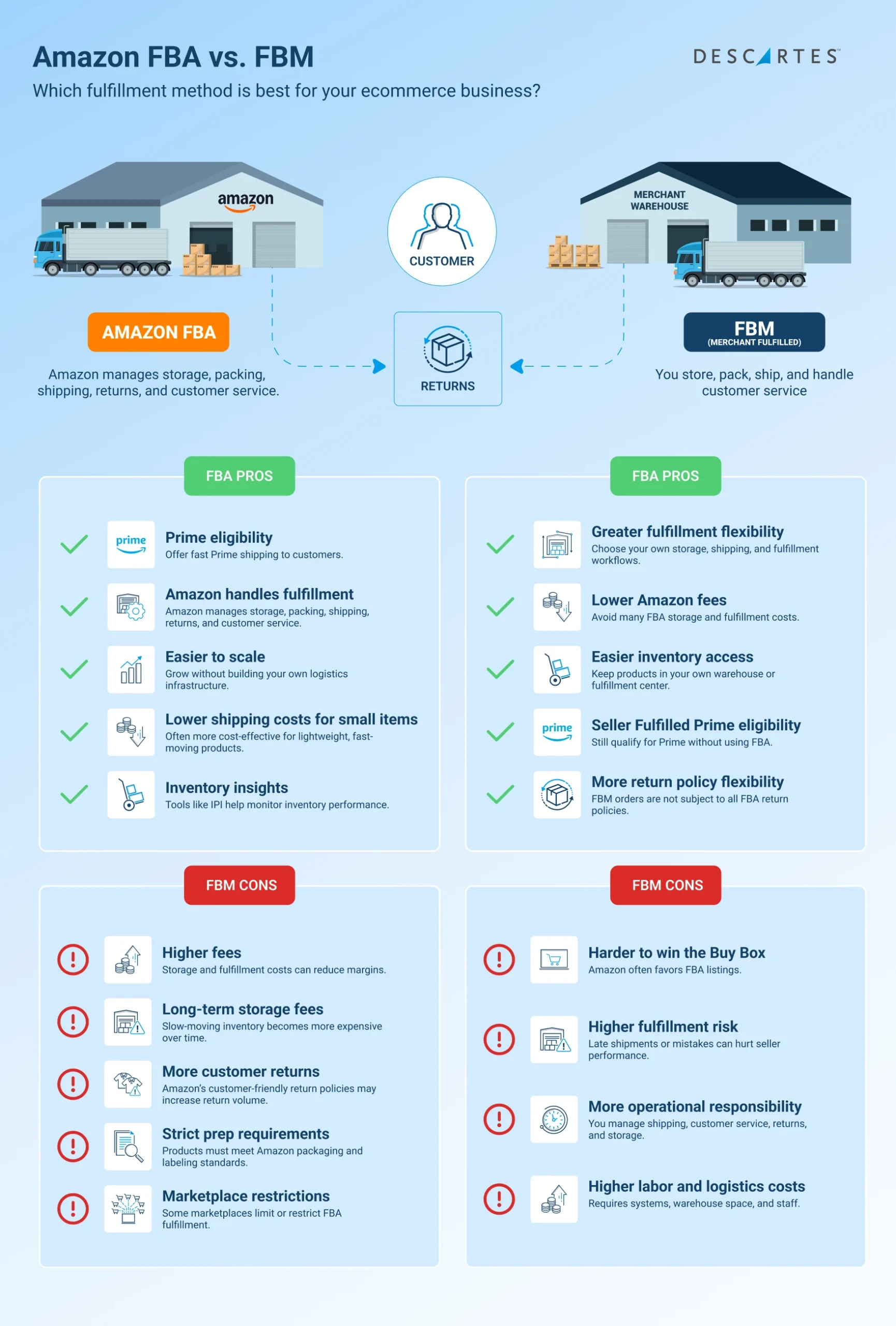
FBA stands for ‘Fulfilled by Amazon.’ When using this method, the seller is not responsible for warehousing, packaging, shipping out their customers’ , customer service, or processing any returns. Instead, the seller sends all their inventory to Amazon warehouses, where Amazon staff do the packaging and shipping for them.
On the other hand, FBM stands for ‘Fulfilled by Merchant,’ and is when the seller is responsible for warehousing, packaging, shipping, and customer support. There are several reasons why an Amazon seller would choose either of these methods, as they each have their own pros and cons. For example, factors such as product weight, size, shipping cost, and others must be considered when determining how to fulfill orders.
But before you make the decision, you need to know how each process works.
How does FBA (Fulfilled by Amazon) work?
According to an article from Analyzer.tools, approximately 82% of Amazon sellers utilized FBA in 2025, which makes it the most popular fulfillment method for third-party Amazon sellers.
Amazon FBA does fulfillment for your products and handles customer support issues such as refunds and returns. But that’s not to say Amazon FBA handles everything for you. As an FBA seller, you’re responsible for listing, selling, and keeping your products at Amazon fulfillment centers well-stocked.
If your inventory ever runs out, Amazon won’t be able to fulfill orders, as they’re unable to restock your products. To keep FBA running smoothly, sellers need to:
- List their products as fulfillment by Amazon.
- Prepare their products to be shipped to Amazon fulfillment centers while abiding by Amazon packing guidelines and shipping and routing requirements.
- Send inventory to fulfillment centers for products to be in stock and ready to sell.
Amazon FBA can be a much-needed relief for third-party sellers who don’t have logistics in place, have high-turnover products, or because fulfillment will be more inexpensive if they outsource it to Amazon. But as expected, its advantages come with a cost. To use Amazon’s FBA services, sellers must pay fulfillment and storage fees that vary based on product size, weight, and category. Smaller standard-size items generally cost far less to fulfill than oversized or heavy products, which can carry significantly higher fees.
How does FBM (Fulfilled by Merchant) work?
Many Amazon sellers choose FBM to maintain ownership of fulfillment and costs. According to an article by Red Stag Fulfillment, approximately 18% of Amazon sellers use FBM or a hybrid fulfillment model. FBM is as straightforward as it seems. The seller buys inventory, warehouses it, sells it, packages it, and ships it. However, this also means those using the FBM method must handle returns, refunds, and customer support.
Sellers who choose FBM don’t have to pay as many Amazon fees, which can lead to higher profit margins if they have the logistics in place. However, sellers using FBM must pay for their Amazon selling plan and referral fees, which typically range from 8% to 15% depending on product category, and all costs associated with storage, fulfillment, shipping, and customer service.
To get started with FBM, all you have to do is create a seller account and start listing products.
Pros and cons of Amazon FBA
Now that you know how Amazon FBA works, let’s look at some of the primary benefits (and challenges) for ecommerce sellers.
Pros of FBA
There are a few reasons why Amazon sellers would choose the FBA path. Here are some of the most popular reasons:
Amazon adds more features to its FBA services
Amazon continues expanding and refining its FBA services, which means your job as a seller on the platform can become increasingly easier over time. Amazon provides features like the comingling of inventory and the Inventory Performance Index (IPI).
IPI lets you improve efficiency and sell-through rate
The IPI feature lets you monitor things like your in-stock inventory, excess inventory, inventory (inventory that cannot be sold due to listing or account issues), and sell-through rates. IPI uses a score to demonstrate how well your inventory is performing, which is calculated using the aforementioned elements. Many experienced FBA sellers aim for an IPI score of 500 or higher to provide a buffer during peak seasons and inventory fluctuations.
FBA reduces the workload for your operations
The greatest benefit of FBA is that it handles fulfillment operations for you. You can scale without having to establish and manage your own fulfillment operations and focus on other parts of your ecommerce business.
Shipping costs are cheaper for smaller items
Since Amazon handles shipping, you’ll notice that you spend less on shipping costs than before (if you’re selling items that are small and light).
Amazon acts as your customer service department
With FBA, Amazon handles customer service (especially returns and refunds) for you. This means you won’t have to be responsible for customer service reps, which costs the company resources.
Prime eligibility and faster shipping
As an FBA seller, all your products will instantly become eligible for free Prime shipping. When chosen by the customer, they’ll receive the product significantly faster. Also, you won’t be charged extra when customers choose Prime shipping, as it’s included with FBA.
Cons of FBA
There are also a few reasons why sellers are reluctant to use FBA or simply choose not to.
You might experience more returns
Amazon’s policies are pretty return-friendly for buyers, which makes it an attractive marketplace. But it can also create issues for FBA sellers since the return policy favors buyers. Amazon’s customer-friendly return policy allows customers to return most FBA orders within 30 days of delivery for a full refund. In some cases, Amazon may extend return windows for specific product categories or holiday periods.
Amazon has its own product prep requirements
Even though Amazon prepares all your products for shipping when purchased, you still must prepare them for delivery to Amazon’s warehouses. Amazon has its own list of requirements for inventory entering its facilities, which means you’re obligated to check, prep, and send products to Amazon fulfillment centers yourself.
Cost is fairly expensive, especially for startups
If you’re a veteran Amazon seller, FBA is probably more affordable and convenient for you. But for new sellers, the price might not be worth it immediately because it could lower your profit margins and increase risk. This is especially true if you decide you no longer want to sell on the platform.
The longer your products sit in inventory, the more they cost you
Amazon charges long-term storage fees if your products sit in its inventory for too long. While these fees aren’t unreasonably expensive, they’re still essential to consider when budgeting.
Some large marketplaces prohibit using Amazon FBA for fulfillment
FBA is a great way to outsource your fulfillment, but it’s not a one-size-fits-all solution for selling on other marketplaces. Some marketplaces still prohibit sellers from using FBA.
This was the case until very recently with Walmart Marketplace. As of 2025, Walmart allows ecommerce sellers to use FBA to fulfill Walmart orders if they use neutral packaging and do not use Amazon Logistics as a carrier.
Pros and cons of Amazon FBM
So, why would someone choose FBM instead of FBA? Here are four considerations.
Pros of FBM
While FBM would resolve many of the cons posed by FBA, there are a few other elements that make it the ideal storage and fulfillment option for some sellers on Amazon. Let’s take a look at them now.
FBM sellers can qualify for Seller Fulfilled Prime
Did you know that you can still make your products eligible for Prime shipping without being an FBA seller? All you have to do is manage stricter shipping standards (which Amazon requires you to prove).
Fewer Amazon fees
When you don’t have to pay Amazon FBA fees (such as Amazon’s long-term storage fees), your profit margins may be a bit higher every time you sell a product. If you have systems in place to handle labor, storage, product handling, and shipping, you have greater oversight of your business’s expenses, which could impact your ability to turn a profit.
More control over your inventory
When your products are sitting in an Amazon warehouse that’s far away, it’s difficult to quickly resolve inventory issues. With FBM, you get to decide where your inventory goes (you can even get your own warehouse or office space) and, thus, make it easier to access.
Exemption from Amazon’s open return policy
With Amazon’s open return policy, products fulfilled by Amazon can be fully refunded for up to 30 days (or longer, depending on product category and time of year). When you aren’t an FBA seller, however, your products aren’t fulfilled by Amazon, meaning they don’t fall under the policy. So, you might experience lower return rates.
Cons of FBM
Below are three common struggles with FBM.
FBA sellers are more likely to dominate the Buy Box
Amazon openly favors FBA sellers when it comes to getting in the Buy Box, meaning FBM sellers are at a disadvantage. Plus, customers tend to purchase products that are labeled as ‘Fulfilled by Amazon’ or contain the Prime badge, making them less likely to purchase from you. However, it’s still very possible for FBM sellers to outperform FBA sellers.
Shipping mistakes
FBA sellers don’t have to worry about shipment and delivery dates but, as an FBM seller, the responsibility is yours. If you do happen to make a shipment mistake, such as shipping late or to the incorrect place, you receive a penalty from Amazon. If it happens too often, your account can even be suspended.
You take on the fulfillment expenses
Amazon FBA boils down to one thing: convenience. As an FBM seller, you’re taking on the responsibility of running your own fulfillment and storage, which comes with added expenses. With FBM selling, you can expect to dedicate a decent chunk of your company’s resources towards inventory stocking, prepping, packaging, shipping, and customer service.
FBA and FBM both have challenges. Descartes Sellercloud helps Amazon sellers manage inventory, fulfillment, and orders from one platform. Book a demo today.
8 Factors to consider before choosing Amazon FBA vs. FBM
Aside from the primary pros and cons of each Amazon selling type and your personal priorities, there are eight other factors to keep in mind when choosing between FBA vs. FBM.
1. Product size and weight
Whether you use FBA or FBM, shipping is always going to be more expensive for products that weigh more. As an FBM seller, you manage shipping costs directly, while FBA sellers pay fulfillment fees that include picking, packing, and shipping services.
Because Amazon charges FBA fees based largely on product size and weight, FBA is more cost-effective for small, lightweight, and fast-moving products. Larger, heavier, or bulky items can become significantly more expensive to store and fulfill through FBA, making FBM a more profitable option for some sellers. Use Amazon’s FBA revenue calculator to compare costs and determine which fulfillment method best fits your business.
2. Customer experience management
Both fulfillment options allow you to improve customer experience in different ways, although one is more hands-on than the other. FBM allows you to have direct contact with the customer, giving you more autonomy. However, FBA lets you boast customer-winning benefits (such as the Prime badge and ‘Fulfilled by Amazon’ label).
3. Seller feedback
Amazon’s ‘seller feedback’ feature lets customers see reviews and feedback from others who have already bought your product. According to a 2026 survey by BrightLocal, “93% of consumers have made a purchase after reading reviews.”
Since sellers using FBM are actively responsible for their customers’ experiences, this means more control over their customer feedback.
4. Product turnover rate
How quickly you sell products plays a vital role in your choice between methods. If an FBA seller has longer turnover rates, they may be subject to long-term storage fees that’ll subtract from their profit margins. For this reason, many sellers with longer product turnover rates choose FBM to avoid those extra fees.
Tip: FBA and FBM sellers can use Sellercloud’s predictive restocking tools to prevent dead stock or to keep products from going out of stock.
5. Fees
Fees are associated with both options. For Amazon FBA, the fees cover the services Amazon performs for you, such as warehousing inventory and fulfilling orders. For FBM sellers, various costs associated with fulfillment and storage become business expenses that they’re responsible for handling.
6. Logistics
The logistics of running an Amazon ecommerce business can require a lot of resources, systems, and labor. Some sellers prefer to handle it themselves, while others would rather outsource it to Amazon.
7. Restrictions from other marketplaces you sell on
Another thing to remember when choosing FBA vs. FBM is the marketplaces you sell on. Amazon allows Multi-Channel Fulfillment (MCF), which means sellers can have orders from their website or other marketplaces fulfilled by Amazon. However, as mentioned above, some marketplaces have shipping restrictions that forbid Amazon from fulfilling orders that originate from their site.
8. Scalability
As your Amazon business grows, your fulfillment needs become more complex. Sellers should consider whether they can realistically scale their chosen fulfillment method as order volume increases.
FBA makes scaling easier because Amazon handles storage, packing, shipping, and much of the customer service. This allows sellers to grow quickly without building their own logistics infrastructure. FBM offers more control, but scaling often requires additional warehouse space, employees, shipping processes, and operational systems. Without the right tools in place, fulfillment can become difficult to manage as order volume increases.
Sellers planning for long-term growth should consider how each fulfillment method will affect labor costs, operational complexity, and their ability to maintain fast shipping and positive customer experiences at scale.
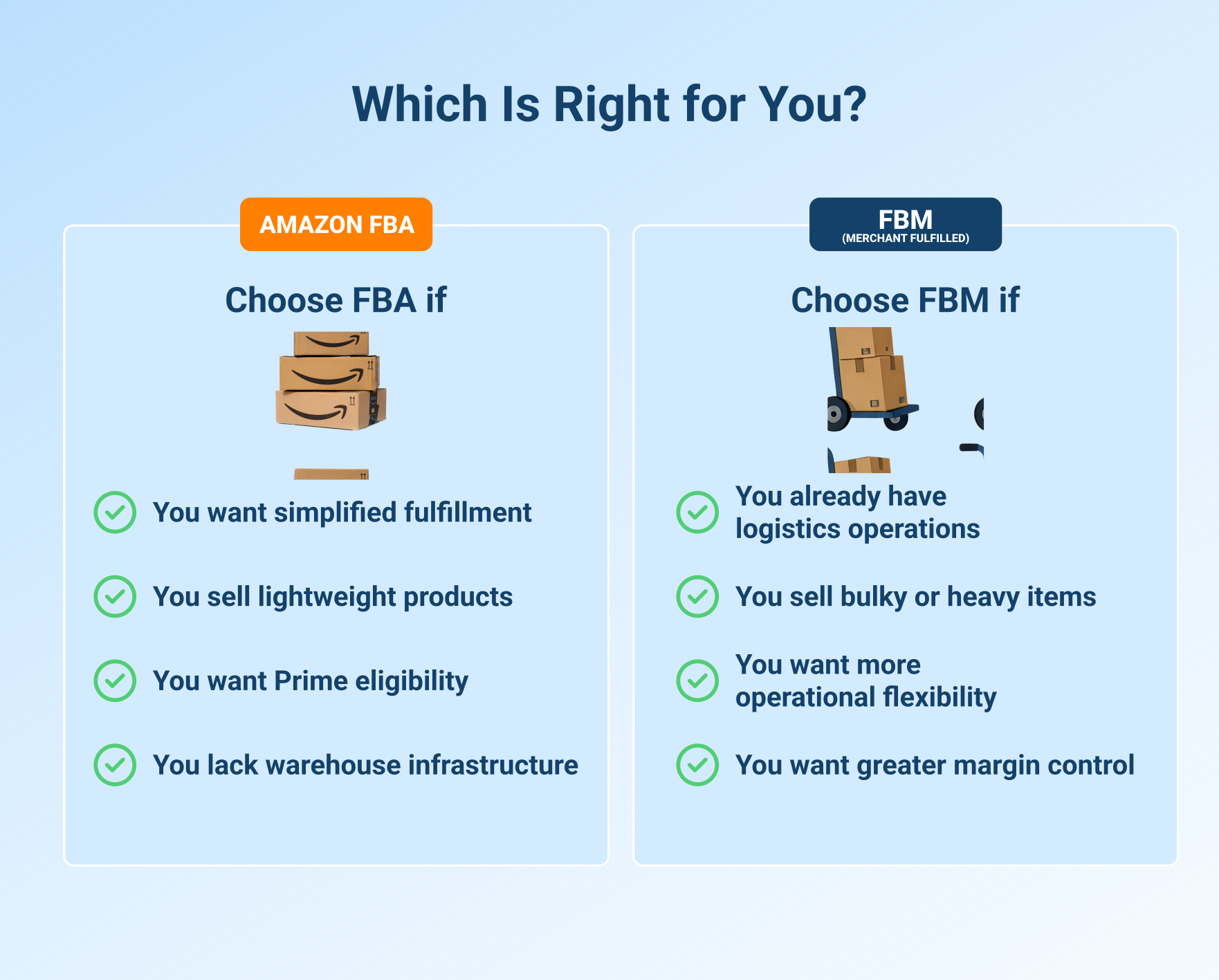
FBA vs. FBM cost breakdown
Amazon fees can add up quickly for FBA sellers, while FBM sellers must take on the direct costs of storage, labor, shipping, and customer service.
| Cost Area | FBA Cost Considerations | FBM Cost Considerations |
| Amazon selling plan | Individual or Professional seller plan applies. | Individual or Professional seller plan applies. |
| Referral fees | Applies to each sale. Fees vary by product category. | Applies to each sale. Fees vary by product category. |
| Fulfillment fees | Amazon charges per-unit fulfillment fees based on product size and weight. | Seller pays internal or third-party costs for picking, packing, and shipping. |
| Storage | Monthly Amazon storage fees apply. Peak season storage can cost more. | Seller pays for warehouse, office, garage, third-party logistics (3PL) service, or storage space. |
| Long-term storage | Aged inventory can trigger extra fees if products sit too long. | Slow inventory still ties up cash and space, but Amazon’s aged inventory fees do not apply. |
| Inbound shipping | Seller pays to send inventory to Amazon fulfillment centers. | Seller pays to receive inventory into their own warehouse or 3PL. |
| Inventory prep | Seller may pay for labeling, bagging, bundling, or prep before sending items to Amazon. | Seller handles prep internally or pays a warehouse or 3PL to do it. |
| Packaging | Included in FBA fulfillment, but prep rules still apply. | Seller pays for boxes, mailers, dunnage, labels, tape, and packing materials. |
| Shipping to customer | Included in FBA fulfillment fees. | Seller pays carrier rates directly or through shipping software. |
| Labor | Lower day-to-day fulfillment labor, but inventory planning is still required. | Higher labor costs for picking, packing, shipping, returns, and customer service. |
| Returns | Amazon handles many return tasks, but return-related costs may still affect profit. | Seller manages return shipping, inspection, restocking, refunds, and exchanges. |
| Customer service | Amazon handles FBA customer service for fulfillment-related issues. | Seller handles customer messages, shipping issues, refunds, and support. |
| Prime-eligibility | FBA products are typically Prime-eligible. | Seller must qualify for Seller Fulfilled Prime to offer Prime without FBA. |
| Software and systems | Seller still needs tools for inventory planning, purchasing, and channel management. | Seller often needs stronger warehouse, shipping, inventory, and order management tools. |
| Storage risk | High if products are slow-moving, oversized, seasonal, or overstocked. | High if warehouse space is limited or inventory is poorly planned. |
| Control costs | Lower control over Amazon fulfillment and storage fees. | More control over carriers, packaging, warehouse processes, and fulfillment rules. |
| Best cost fit | Small, fast-moving, lightweight products with steady demand. | Large, heavy, slow-moving, fragile, customized, or higher-margin products. |
When to use Amazon FBA?
If you don’t mind spending a bit of money to get your Amazon business off the ground Amazon fees. In other words, FBA is best for sellers looking to outsource most of their fulfillment tasks.
Also, FBA is better suited for selling on Amazon, their own website, or marketplaces that do not restrict the use of FBA. Sellers using FBA are more likely not to have their own warehouse, resources, and workers to properly package and ship products and handle customer service.
Using FBA as a startup can be risky and rewarding. On the one hand, it makes starting your ecommerce career easier with fulfillment logistics already in place. But on the other hand, you risk wasting money if your products don’t sell quickly or if you decide that FBA isn’t for you.
When to use Amazon FBM?
FBM is advantageous for sellers who want to manage every part of their business possible (from packaging the product to customer experience) and don’t mind spending extra resources to compete with FBA sellers dominating the buy box. Sellers using FBM might also have an easier time diversifying their ecommerce channels since they don’t have to worry about FBA restrictions from other marketplaces.
In the end, you’re taking on more responsibility, which can lead to more rewards with FBM. If you value higher profit margins without the Amazon FBA fees or monthly subscription costs, in exchange for more control, then FBM is likely the best choice for you.
Strengthen your Amazon FBA and FBM processes with Descartes Sellercloud
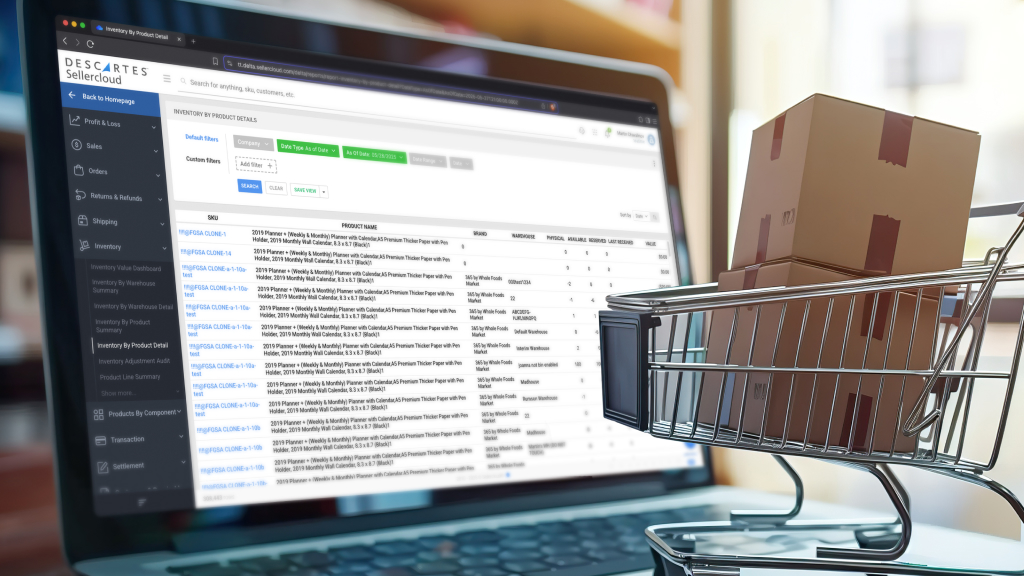
Regardless of your business choice, you need to make sure your purchasing, inventory management, fulfillment, and shipping are all connected. And if you’re doing FBM, this is increasingly crucial since you’re responsible for all aspects of ecommerce. An easy solution? Using an all-in-one ecommerce platform, like Sellercloud.
Sellercloud is your end-to-end management solution for your ecommerce business that ends inefficient restocking, overselling, poor inventory management, and much more.
Request a demo today to see how Sellercloud can make your ecommerce business more efficient and profitable.
If you enjoyed this blog post on FBA vs FBM and how to choose the best for you, you may also benefit from reading the following:
- How to Change from Amazon FBA to FBM Successfully?
- Amazon FBA Automation: How to Automate Your FBA Workflow
- Amazon FBA Removals: Fees, Challenges, and How to Manage Them at Scale
FBA vs FBM FAQs
Is FBA or FBM more profitable?
It depends on your products, shipping costs, storage needs, and operational setup. FBA can reduce labor and improve conversion rates through Prime eligibility, while FBM may offer better margins for bulky, heavy, or slow-moving products.
Can you use both FBA and FBM at the same time?
Yes. Many Amazon sellers use a hybrid fulfillment strategy where some products are fulfilled through FBA while others are fulfilled through FBM based on profitability, size, seasonality, or inventory levels.
Does FBM qualify for Amazon Prime?
Yes. FBM sellers can qualify for Seller Fulfilled Prime if they meet Amazon’s shipping and performance requirements.
Is FBA better for beginners?
FBA can be easier for new sellers because Amazon handles storage, packing, shipping, returns, and much of the customer service. However, FBA fees can reduce margins, especially for low-volume sellers or slow-moving products.
What tools help manage FBA and FBM operations?
Inventory management software, shipping tools, warehouse management systems (WMS), and order management systems (OMS) can help sellers manage inventory, fulfillment, purchasing, and multichannel operations more efficiently.
Related Posts