
Key takeaways
- The best Linnworks alternatives are Descartes Sellercloud™, Cin7 Omni, Extensiv Order Manager, Brightpearl, and Zentail.
- Cin7 Omni suits complex multichannel and wholesale operations, Extensiv Order Manager emphasizes multichannel order automation, Brightpearl focuses on retailers and wholesalers, and Zentail is suited to smaller sellers focused on listings and inventory.
- Businesses often look for Linnworks alternatives when they add new sales channels or warehouses, need different integrations, or want stronger purchasing, reporting, automation, or fulfillment tools.
- Compare each platform against the parts of your operation you actually need to improve, then check whether its integrations, pricing, and customization options fit the way your business works.
- Sellercloud is our best overall Linnworks alternative for established and growing multichannel sellers.
Linnworks is an all-in-one ecommerce solution headquartered in Chichester, UK, and has had a US presence since at least 2018. In September 2021, Marlin Equity Partners completed a majority-control growth investment in Linnworks. In September 2022, Linnworks acquired competitor SkuVault. Today, Linnworks provides two primary products: Linnworks Advanced and SkuVault Core.
Below, we compare five Linnworks alternatives, including where each platform is strongest, what it costs, and which types of ecommerce businesses it suits best.
What are the best alternatives to Linnworks?
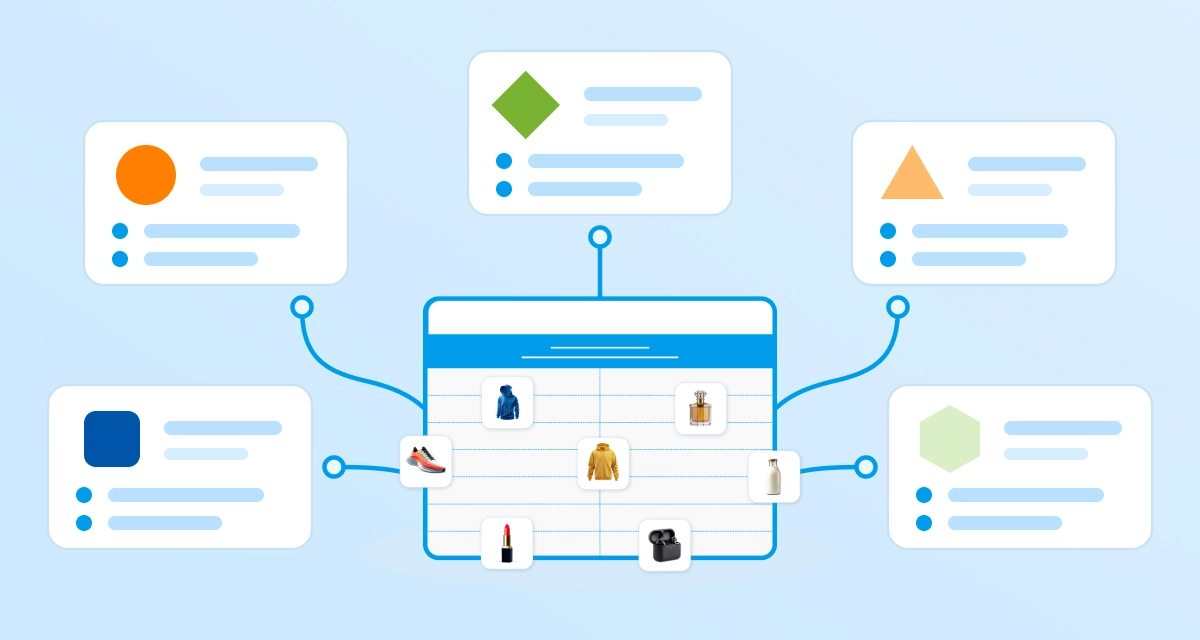
Here are five of the best Linnworks competitors to consider based on their features, use cases, and suitability for different ecommerce operations. These platforms cover different needs, from warehouse-heavy operations and wholesale to order automation and multichannel listing management.
1. Descartes Sellercloud™: Best overall Linnworks alternative
Sellercloud is the top Linnworks alternative for established and growing multichannel sellers that want to manage more of their ecommerce operations in one platform. It covers much more than inventory and orders. Purchasing, listings, warehouse management, shipping, and reporting are built into the platform, with customization available for businesses that need to accommodate processes beyond the standard setup.
Top reasons to consider Sellercloud
- Connect your ecommerce operation with 350+ integrations across marketplaces, webstores, fulfillment platforms, shipping providers, and other business systems.
- Access standard phone and email support, the Sellercloud Support Portal, and 24/7 emergency phone support, with Premium, Gold, and Platinum support options also available.
- Purchasing tools include purchase orders (POs), predictive purchasing, vendor management, and configurable product and PO cost calculations.
- Analyze performance with more than 60 reports covering profit and loss, sales, orders, returns and refunds, shipping, inventory, settlements, and other areas of your operation.
- Sellercloud supports several Amazon programs, including Fulfillment by Amazon (FBA), Multi-Channel Fulfillment (MCF), Vendor Central, and Direct Fulfillment.
- Skustack is Sellercloud’s warehouse management system (WMS). It handles warehouse tasks such as barcode scanning, receiving, putaway, picking, packing, and cycle counts, while keeping inventory updated in real time.
- Sellercloud can also be customized with configurable workflows, plugins, custom features, and development from its in-house customization team.
- Use transparent per-order pricing with no revenue share or hidden fees, while core capabilities such as unlimited users, unlimited integrations, warehouse management, shipping software, reporting, and API access are included.
Sellercloud reviews
Capterra reviews frequently mention Sellercloud’s customization, support, and multichannel inventory tools.
One reviewer described customization as their favorite part of the platform:
My favorite thing about Sellercloud is their willingness and ability to customize the platform. For us, that meant building up the integration with Amazon custom and formatting the data that comes through in a way that is easy to use. They also built a custom invoice that makes it easier for our production team to fill orders accurately.
Another reviewer focused on their experience with Sellercloud’s customer support:
customer service agents are very very helpful and will always sort out your issue.
A third reviewer described their experience using Sellercloud for multichannel ecommerce and inventory management:
Everything was smooth sailing from integration to adding new channels 2 years in. Seamless system to handle multi-channel eCommerce sales. Skustack Inventory Management system means nothing is ever not where is supposed to be, so order fulfillment is fast, easy, and customers are always satisfied.
See how Sellercloud helped Trekline Motorsports significantly improve its workflow efficiency.
You can also check out Sellercloud’s case studies and testimonials. Request a demo today to learn more about Sellercloud.
Sellercloud pricing
Sellercloud uses per-order pricing, with annual subscriptions starting at $1,349 per month. Pricing varies based on order volume and selected add-ons rather than taking a share of your revenue.
The subscription includes unlimited users and integrations, along with core features for inventory, product, order, warehouse, purchasing, listing, shipping, reporting, and API access. Sellercloud also offers optional add-ons, including Custom Apps, Enterprise Support, and Private Cloud.
Check the Sellercloud pricing page for current pricing based on your order volume and requirements.
2. Cin7 Omni: Best for complex multichannel and wholesale operations
Cin7 Omni is aimed at established retailers and wholesalers with more complicated multichannel inventory and order workflows. It is most relevant when inventory is spread across multiple locations and needs to connect with a wider technology stack.
Top reasons to consider Cin7 Omni
- Connect with 700+ app partners across ecommerce, marketplaces, accounting, shipping, fulfillment, and other business systems.
- Synchronize inventory across sales channels and manage sales from a centralized interface.
- Inventory can be tracked across warehouses, with zones and bins available for more precise stock locations.
- Cin7 supports kits and bundles and adjusts available inventory as their component products are sold.
- Configure automated workflows and create custom integrations through Cin7 Omni’s API.
- Manage dropshipping processes, including setting products for dropship orders and automating parts of the dropshipping process.
- Create and receive POs and access sales and order reporting within the platform.
- Support Amazon fulfillment, including FBA and Amazon MCF.
Cin7 Omni reviews
Reviews of Cin7 Omni commonly mention usability, integrations, and flexibility.
One TrustRadius reviewer highlighted its ease of implementation and use:
Cin7 software is easy and intuitive to use. The pricing was competitive for cloud-based software that can be customized to each business.
A 2026 Capterra reviewer mentioned the platform’s API and flexibility:
What I liked most about Cin7 Omni is its robust API and the flexibility it offers in the UI.
A G2 reviewer described its value for connecting inventory and other business systems:
It’s made managing our operations much more efficient with inventory management and integrations with Shopify and Xero.
Cin7 Omni pricing
Cin7 does not currently publish a fixed price for Cin7 Omni. Instead, businesses need to contact Cin7 for a personalized quote based on their needs.
The standard Omni package includes access for eight users, unlimited inventory locations, and five ecommerce and app integrations, with additional users and integrations available for purchase. Cin7 describes Omni as a customizable solution with flexible sales order volume. Optional features and services can also affect the overall cost.
Because Cin7 Omni pricing is tailored to each business, consider the full quote alongside the features, integrations, user access, and optional services your operation requires.
How does Cin7 Omni compare to Linnworks?
Cin7 Omni and Linnworks both bring inventory, order, warehouse, and multichannel features together, making the choice between them dependent on the functions that matter most to your business.
Cin7 Omni makes the strongest case for businesses managing stock across several warehouses and sales channels, especially when a large integration ecosystem matters. Its 700+ app partners give businesses plenty of options for connecting other systems, while its API and support for FBA and MCF cover more specialized processes.
3. Extensiv Order Manager: Best for multichannel order automation
Extensiv Order Manager stands out mainly for order automation, making it a useful option for multichannel sellers with increasingly complicated routing and fulfillment rules. The platform centralizes orders and inventory while using rules to automate tasks such as order routing. Purchasing and fulfillment tools are included as well.
Top reasons to consider Extensiv Order Manager
- Manage orders and inventory across multiple ecommerce sales channels from a centralized system.
- Keep inventory synchronized across channels and control how much available inventory is allocated to individual sales channels.
- Manage multiple fulfillment locations, including in-house warehouses, third-party logistics (3PL) providers, Amazon FBA, dropshippers, and retail locations.
- Automate order management and fulfillment workflows with Orderbots, including order routing and other rules-based processes.
- Create and track POs, with tools for managing vendors and receiving inventory.
- Create kits and bundles while tracking their available inventory by SKU and warehouse.
- Access cross-channel reporting and analytics covering areas such as revenue, orders, units sold, inventory, products, customers, and accounting.
- Manage FBA inventory and MCF operations.
Extensiv Order Manager reviews
G2 reviews often focus on Extensiv’s interface and its ability to automate order and fulfillment work.
One reviewer, who uses Extensiv Order Manager along with Bulu, noted the platform’s interface and customer service:
The best part about Bulu using Extensiv Order Manager has to be a toss up between the User Interface and Customer Service. We’ve tried a dozen options and Extensiv is up there as #1!
Another reviewer highlighted the range of ecommerce operations they manage with Extensiv Order Manager:
Extensiv Order Manager serves as a pretty solid in-between/intermediate OMS / lite-ERP system that can handle order routing, fulfillment, purchase order creation and tracking and supports many integrations for other tools and features.
A third reviewer focused on its order management automation:
Order bots simplification leading to automated order management process.
Extensiv Order Manager pricing
Extensiv does not currently publish standard subscription pricing for Extensiv Order Manager on its website. Businesses interested in the platform should contact Extensiv for current pricing based on their requirements.
Some integrations and workflows can involve other products within the Extensiv platform, so confirm what is included in your proposed Order Manager package and whether additional services or products are required.
How does Extensiv Order Manager compare to Linnworks?
Extensiv Order Manager and Linnworks overlap in several important areas, including multichannel inventory, order management, purchasing, fulfillment, and reporting.
Order automation is the clearest reason to choose Extensiv Order Manager over some of the other options on this list. Its Orderbots allow businesses to create rules that automate order and fulfillment workflows, while its inventory tools provide centralized visibility across sales channels and fulfillment locations.
However, the scope of the two platforms differs. As mentioned above, some features within the wider Extensiv ecosystem are delivered through separate products rather than Order Manager itself.
4. Brightpearl: Best for multichannel retailers and wholesalers
Brightpearl is a retail operations platform for multichannel merchants and wholesalers. Its main appeal is the combination of retail operations and accounting in one system, particularly for merchants selling through several channels or locations.
Top reasons to consider Brightpearl
- Synchronize inventory in real time across connected online and offline sales channels.
- Manage orders from connected sales channels in one place, with orders automatically imported into Brightpearl for centralized processing.
- Brightpearl’s Automation Engine uses rules to automate repetitive order and fulfillment tasks.
- Manage inventory across warehouses and use warehouse locations such as aisles, bays, shelves, bins, and zones for more precise inventory tracking.
- Create and receive POs and manage purchasing and vendor workflows within the platform.
- Create kits and bundles while managing the products that make up each bundle.
- Build custom integrations through Brightpearl’s API to connect the platform with other applications.
- Access a Customer Success Team alongside 24/7 phone and email support from technical specialists.
Brightpearl reviews
Brightpearl reviews frequently mention its automation tools and ability to connect different parts of a multichannel retail operation.
A G2 reviewer said how Brightpearl connects different parts of their multichannel operation:
Brightpearl is a robust system that allows us to sell to multiple channels and links into our 3PL and accounting software. It gives us the security we need to manage our core business data and operations efficiently and certainly saves the team a lot of time.
Another G2 reviewer focused on Brightpearl’s automation capabilities and customer support:
The automation engine has proven invaluable for handling some of our more complex and specific requirements. The wide range of triggers, especially when used alongside Shopify Flow, has allowed us to respond quickly and process orders faster, eliminating the need for complicated order routing rules.
Meanwhile, a Capterra reviewer praised how Brightpearl supports growing multichannel ecommerce operations:
Brightpearl has been a key platform in helping us scale our ecommerce operations across multiple channels and warehouses. The automation functionality is especially powerful and has helped us significantly reduce manual processes across order management, inventory, and fulfilment.
Brightpearl pricing
Brightpearl does not publish standard pricing. Businesses need to reach out and request a demo. Brightpearl will then provide a quote based on their needs.
How does Brightpearl compare to Linnworks?
Brightpearl and Linnworks both support multichannel ecommerce operations, with capabilities spanning inventory, orders, purchasing, warehouses, and fulfillment. Brightpearl is strongest for retailers and wholesalers that want accounting and automation closely connected with inventory and order management.
Brightpearl’s Automation Engine is one area to consider closely. Businesses can create rules to automate ecommerce workflows, while its API provides another way to connect Brightpearl with the other applications used across their operations.
5. Zentail: Best for small multichannel sellers focused on listings and inventory
Zentail focuses on three core multichannel tasks: product listings, inventory, and order management. That narrower focus makes it a good fit for sellers that do not need a broader operations platform.
Top reasons to consider Zentail
- Create and manage product listings across sales channels from one place.
- Synchronize inventory across connected sales channels and warehouses as orders are received.
- Set inventory thresholds to reserve stock and help prevent overselling, including the option to allow selected channels to ignore the threshold.
- Manage orders from multiple sales channels in one interface, with orders automatically synchronized from connected channels.
- Create custom order-routing workflows and request access to Zentail’s listing API for custom sales channel integrations.
- Create kits, packs, and bundles, and manage product images individually or in bulk.
- Manage purchasing with POs, inbound shipments, demand forecasting, and estimated receipt dates.
- Analyze multichannel performance with reporting for sales, orders, profits, shipping costs, settlement reconciliation, and custom report templates.
Zentail reviews
Zentail reviews tend to be positive about usability and support, while several users also mention its inventory and reporting tools.
On G2, one reviewer highlighted Zentail’s user-friendly interface and customer support:
I love how user-friendly the interface of the software is, and that there is always available support through chat or help articles. I also really appreciate that the team at Zentail listens to any suggestions and truly takes the feedback into consideration.
Zentail is very easy to use, and manage inventory. The reports are easy to follow and make financial reporting easy. We have inventory in several locations and this helps us manage all locations.
Elsewhere, a Capterra reviewer mentioned the breadth of features available to different teams and their experience with Zentail’s customer support:
Everybody in our company uses Zentail a little differently, but there’s features for everybody. I know there’s a lot more Zentail can do that I haven’t even touched yet (I’ll leave these to their respective departments). Every now and then we’ll run into a bug or have a question about a feature, and Zentail’s support team has always been very responsive and helpful.
Zentail pricing
Zentail uses tier-based pricing with three plans: Single Channel, Multichannel, and Enterprise. The Single Channel plan is designed for businesses selling through one sales channel, while the Multichannel plan is intended for businesses selling across channels. The Enterprise plan is aimed at larger operations.
How does Zentail compare to Linnworks?
Zentail makes more sense for smaller sellers whose main challenge is keeping listings and inventory synchronized across channels.
There are differences in the scope of the two platforms. Linnworks provides native WMS functionality, while Zentail relies on external options. Linnworks also has 100+ native integrations, while Zentail has 51.
Why do businesses search for alternatives to Linnworks?
Businesses may search for Linnworks alternatives when something in their operation has changed. They may have added warehouses, moved into new marketplaces, outgrown an existing workflow, or found that a needed integration is missing.
For example, a growing seller might need to support more sales channels, warehouses, products, or fulfillment methods. Others may be looking for different capabilities around purchasing, warehouse management, reporting, automation, and Amazon workflows.
Technology challenges can also influence the decision. Businesses may need particular marketplace, carrier, accounting, 3PL, or other integrations, or they may want greater flexibility to connect ecommerce operations with their existing technology stack. The availability of APIs and options for custom development can therefore become important selection criteria.
Cost is another practical consideration. Ecommerce platforms use different pricing structures and may package functionality, users, integrations, support, and additional services differently.
What do Linnworks reviews say?
Linnworks receives generally positive reviews across G2, Capterra, Trustpilot, and Software Advice. Flexibility and integrations come up repeatedly, along with automation and multichannel inventory management.
On G2, one reviewer noted Linnworks’ flexibility and ability to support increasingly complex operations:
The flexibility of the system is particularly valuable. We can customise workflows, automate routine tasks, manage stock across multiple warehouses, and integrate with a wide range of marketplaces and carriers. This has helped us improve operational efficiency, maintain inventory accuracy, and scale the business without needing to significantly increase administrative overhead.
A Capterra reviewer praised Linnworks’ ease of use and kit management capabilities:
I loved how user friendly it is. I came into my role with hardly any experience in Linnworks, and have been able to execute my job with excellence. Additionally, I love the convenience of being able to set up Kits and easily manage them as well as edit the kits. Our other software we use for order management isn’t as easy to use so that makes me specially grateful for skuvault/linnworks.
Meanwhile, a Trustpilot reviewer highlighted their experience using the Linnworks API for inventory and fulfillment workflows:
Having worked with the Linnworks API across various iterations, the consistency and granularity remain its strongest points. We’ve used it to bridge gaps in inventory logic and specialized fulfillment workflows for years.
Finally, a Software Advice reviewer focused on Linnworks’ API integrations with marketplaces and shipping partners:
what I like most about linnworks works would be how easy the API integration into marketplace and shipping partners are. The software allows me to save time and expenses because it allows my marketplace to run in one place.
How to choose the best alternative to Linnworks?
Start with the reason you’re considering leaving Linnworks. The feature or workflow creating problems today should carry more weight than a long list of features you may never use.
Consider what matters most to your operation. Ask yourself:
- Which features could help us improve efficiency?
- Which integrations are essential, and which are merely nice to have?
- Which manual tasks do we want the replacement platform to remove?
- Will the platform still work if we add another warehouse, marketplace, or fulfillment method?
With these necessities identified, compare ecommerce platforms based on how closely they align with your priorities. Don’t stop at the feature checklist. Think through what happens from the moment stock is purchased to the point an order is shipped, then identify where each platform would require extra software or manual work.
The shortlist should change with the problem you’re trying to solve. For example, Brightpearl deserves more attention if retail operations and accounting need to sit closely together, while Extensiv becomes more interesting when automated order routing is the bigger concern.
Give the most weight to the problems your team deals with every day. The best replacement does not need more features than Linnworks; it needs to solve the problems that made you consider switching in the first place.
Why is Sellercloud the best alternative to Linnworks?
The best Linnworks alternative depends on what you need to change and what you want to preserve. Some alternatives on this list are stronger in a specific area. Sellercloud ranks first overall because it covers a wider portion of the ecommerce operation in one system.
Sellercloud is well suited to businesses whose needs are likely to become more complex over time. Rather than choosing a solution around one immediate challenge, sellers can manage processes spanning the product lifecycle, from purchasing and listing through inventory, fulfillment, shipping, and performance analysis.
Sellercloud also gives businesses several ways to adapt the system, including configurable workflows and custom development. Businesses can configure around their existing processes and use customization when their requirements extend beyond standard functionality. As sales channels, warehouses, order volumes, and operational requirements change, this gives sellers more room to adapt the platform rather than reshape their processes around a fixed way of working.
For businesses comparing Linnworks alternatives, that combination of operational breadth, flexibility, and room to scale is what makes Sellercloud our best overall choice. The right solution still depends on your priorities, but Sellercloud is particularly compelling when you want to consolidate ecommerce operations without limiting how those operations can evolve.
Ready to discover what challenges Sellercloud can help you solve? Book a demo today to see what we can do for your business.
If you enjoyed this blog post on Linnworks alternatives, you may also benefit from reading the following:
Linnworks alternatives FAQs
Where is Linnworks based?
Linnworks is headquartered in Chichester, UK. It also has offices in London, Louisville, Kentucky, and Tallinn, Estonia.
Who owns Linnworks?
Marlin Equity Partners is the majority shareholder of Linnworks.
How many businesses use Linnworks?
Linnworks says it serves more than 4,000 ecommerce retailers. The company works with multichannel sellers ranging from growing businesses to established brands.
What training and learning resources does Linnworks offer?
Linnworks provides online documentation, tutorials, and masterclasses covering its main inventory, order, listing, warehouse, and automation tools.
Does Linnworks have a mobile app?
Yes. Linnworks Mobile supports Android devices and can be used for warehouse tasks such as order processing, stock counts, receiving inventory, stock movements, and barcode scanning. Available functions vary with the Linnworks setup used in the warehouse.
The information presented on this website, including all product comparisons, is provided for informational purposes only. While we strive to ensure the accuracy and timeliness of the information, all comparisons between our product and those of competitors are based on publicly available data and/or our own internal assessments. We do not represent or warrant that the information related to third-party products is complete, current, or free from error. All product names and company names are the property of their respective owners and are used solely for the purpose of comparison. No endorsement or affiliation is implied. Product features, performance, and pricing may vary over time or by region. Users are encouraged to verify any information directly with the relevant third-party source before making any purchasing decisions. This website does not intend to misrepresent, disparage, or make false claims about any third-party products or services. If you believe any information presented is inaccurate or unfair, please feel free to reach out to us so we can address your concerns.
Related Posts