Key takeaways
- Amazon fulfillment returns should prioritize speed, not verification.
- Sellers often absorb risk before inventory is physically inspected.
- Fraud exposure increases when refunds outpace evaluations.
- Marketplace constraints shift responsibility without removing accountability.
- Strong internal discipline helps sellers stay profitable under Amazon’s rules.
Amazon fulfillment returns are designed to move quickly. From the customer’s perspective, speed is a feature. From the seller’s perspective, it can quietly create a risk window where refunds are issued long before anyone has verified what actually came back.
As return volumes grow, many Amazon sellers discover that profitability is not lost at checkout or shipping. It is lost later, during the gap between approval and inspection.
In this article, Troy Graham, Descartes Enterprise Account Manager, shares real-world insights from working with ecommerce sellers, explaining where risk enters the Fulfillment by Amazon (FBA) returns process, how it impacts profitability, and what sellers can do to regain control.
Why Amazon returns feel different from every other channel
Selling on Amazon means operating inside a customer-first framework that sellers do not control. For Fulfilled by Amazon returns, this often means policies are enforced automatically, leaving sellers little room to slow down the process for verification. Graham hears this frustration frequently when speaking with brands that sell through marketplaces.
Often, sellers will tell Graham, “One of the challenges that I’m facing as a brand today is I may have constraints around return policies from a third party. Maybe I’m selling on Amazon or eBay, and they have certain requirements that I have to adhere to.”
In some cases, those constraints limit a seller’s ability to understand the condition of a return before action is required. Because of this, speed often takes precedence over verification. Sellers will tell Graham, “If a customer makes a return, I may have to accept it and not have an opportunity to actually understand what the condition of that return was.”
From the seller’s perspective, the decision feels premature. From Amazon’s perspective, it is about protecting customer trust.
The invisible window where losses accumulate
The most part of the Amazon returns process is not the return itself, but the time between when a return is approved and when the product is physically evaluated.
Graham describes one example that stuck with him. Amazon accepted a return on behalf of a seller, and the seller had to issue customer credit. Only later did the seller discover that the customer had 3D printed parts to look exactly like the returned product.
This is not an isolated story. It is an example of how risk accumulates quietly when refunds move faster than verification.
Struggling with returns? Speak with an expert and find out what Descartes Sellercloud can do for your business.
When marketplace scale magnifies small return problems

At low volume, navigating Amazon FBA returns and handling problematic and fraudulent returns are painful but manageable. However, at scale, they become systemic. A single questionable return does not break a business, but hundreds can.
As Graham points out, sellers must think about risk differently when marketplaces are involved. Putting himself in the position of an ecommerce seller, he says, “as a business owner, I’ve got to evaluate the risk associated with selling in certain channels and the potential fraud that I’m opening myself up to by the constraints put on me by that third party.”
The operational discipline Amazon does not provide
Amazon manages the customer-facing experience, but sellers still own what happens inside their warehouse. That includes receiving returned inventory, evaluating it, and deciding whether it can be resold.
This is where many sellers feel the strain. Marketplace workflows move quickly, but internal processes are often not built to keep up. Ecommerce sellers often receive returns far faster than they can access, then struggle to find the time to carefully evaluate them as the pile grows. It is only much later that they realize that there is a problem with a return.
Without discipline, inventory lingers in limbo. Without visibility, sellers make decisions based on assumptions instead of facts.
Where centralized operations restore control
Sellers cannot change Amazon’s rules, but they can change how prepared they are to operate within them. This can be done by centralizing operations to help close the gap between customer-facing actions and warehouse reality.
The best way to do this is with an ecommerce solution that provides visibility across orders, inventory, and returns, and allows sellers to respond with confidence instead of reaction.
Graham emphasizes that many sellers often have tools to centralize their operations, but they might not be using them to their full potential. He advises sellers that before they make a large investment in new technology, they should ensure they look at what they already have access to today.
What experienced Amazon sellers accept early
Amazon fulfillment returns are fast by design. The sellers who stay profitable are the ones who recognize where risk enters the process and build discipline around it long before it becomes visible in their margins.
Experienced sellers focus on mitigation, utilizing warranty registration and serialization. For everything else, they accept a degree of loss and design processes that keep it from spiraling.
How Descartes Sellercloud improves Amazon fulfillment returns handling
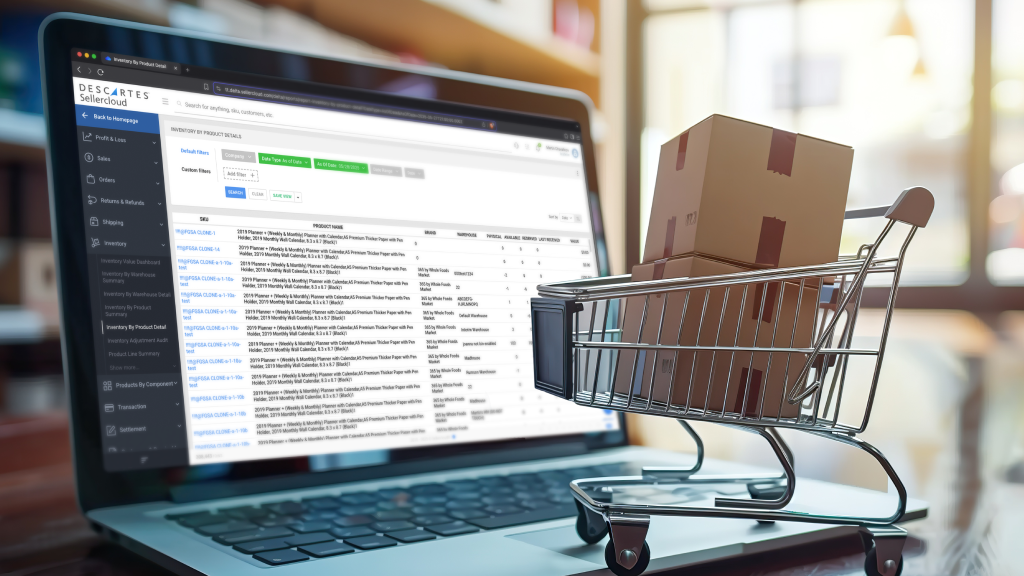
Sellercloud acts as a central command layer, connecting FBA data with internal warehouse workflows. Its returns management features track status, reason codes, and inventory disposition in one view. When paired with Sellercloud’s Skustack warehouse management system (WMS) module, sellers can inspect, classify, and reintegrate returned items while syncing with Amazon and third-party return integrations.
Watch the video below to see how Sellercloud helps ecommerce sellers manage returns.
Is your business struggling with FBA returns? Book a Sellercloud demo today to discover how we can solve your challenges.
Amazon fulfillment returns FAQs
Why do Amazon returns feel harder to control than other channels?
Marketplace rules prioritize customer experience and speed, often limiting a seller’s ability to verify returns before refunds are issued.
How do refunds impact Amazon seller profitability?
Refunds issued before inspection can lock in losses, especially when returned inventory cannot be resold.
Where does fraud typically enter Amazon return workflows?
Fraud often enters during the gap between return approval and physical inspection.
What responsibility do sellers still have in Amazon returns?
Sellers remain responsible for receiving, inspecting, and classifying returned inventory, even when marketplaces manage the front-end process.
How can sellers regain visibility after a return is approved?
By improving internal coordination between order data, inventory, and warehouse operations.
Related Posts